Trends come and go—but your daily life stays surprisingly consistent.
Most shoe-buying regret doesn’t come from poor taste. It comes from choosing shoes based on how we want to live, rather than how we actually live. We buy shoes for imagined dinners, hypothetical trips, or a version of ourselves that rarely shows up on a Tuesday morning.
This guide is about shifting that mindset.
Instead of asking “Is this trendy?”, we’ll focus on a far more useful question:
“Does this shoe truly support my lifestyle?”
When shoes match your real life, getting dressed becomes easier, outfits feel more natural, and your wardrobe suddenly starts working as a system.
Why Trend-Driven Shoes Fail Most Closets
Trend shoes often look great online—but struggle in real life.
Common issues include:
- Too uncomfortable for long wear
- Too specific to pair easily
- Too fragile for daily use
- Too bold to repeat often
The result? Shoes that sit untouched while you rotate the same two reliable pairs.
A lifestyle-based approach solves this by prioritizing usefulness over novelty.
Step One: Get Honest About Your Daily Reality
Before you buy another pair of shoes, pause and assess how you actually move through your day.
Ask yourself:
- How many hours am I on my feet?
- Do I walk, commute, or drive most days?
- What surfaces do I walk on—pavement, stairs, grass?
- How formal is my environment?
- What shoes do I reach for most often right now?
Your current habits are the most accurate guide to future wear.
Shoes Should Support Movement, Not Interrupt It
Shoes that match your lifestyle allow you to move through your day without constant adjustment.
Good lifestyle shoes:
- Don’t require “breaking in” pain
- Don’t force outfit compromises
- Don’t limit walking or standing
- Don’t distract you from your day
If you’re always thinking about your shoes, they’re probably not right.
Identify Your Personal Shoe Categories
Instead of shopping by style names (loafers, heels, sneakers), shop by function.
Most lifestyles fall into a mix of these categories:
Everyday Casual
Walking, errands, relaxed social plans
Polished Daily Wear
Work, meetings, appointments, dinners
Comfort-First Movement
Travel days, long walks, active routines
Occasional Dress
Events, celebrations, evenings out
Once you know which categories dominate your life, buying becomes clearer—and smarter.
Match Shoe Structure to Your Environment
Structure matters more than trend.
- Soft, flexible soles suit walking-heavy days
- Structured uppers elevate casual outfits
- Stable heels outperform thin ones in real settings
- Closed toes work better in unpredictable environments
A shoe can be stylish and practical—but only if it matches where you’re wearing it.
Why Comfort Is a Style Strategy
Comfort isn’t separate from style—it’s what makes style believable.
When shoes are comfortable:
- You stand differently
- You walk with confidence
- You move naturally
- You repeat outfits without hesitation
Comfort creates ease, and ease is what makes outfits feel modern and confident.
Trend vs. Translation: The Smarter Way to Shop
You don’t have to ignore trends entirely—you just need to translate them.
Instead of buying the trend directly, ask:
- Can this trend be expressed in a simpler silhouette?
- Is there a toned-down version that fits my wardrobe?
- Will I still wear this a year from now?
This keeps your style current without sacrificing longevity.
Color Choices That Support Real Wear
Lifestyle-friendly colors are repeatable colors.
The most wearable options include:
- Black
- White or off-white
- Brown or tan
- Neutral beige
- Soft metallics
Bold colors can be fun—but they work best when the rest of your wardrobe supports them.
Neutral shoes create freedom. Loud shoes create limitations.
The Cost-Per-Wear Test (Use It Every Time)
Before purchasing, ask:
“How many outfits will I realistically wear this with?”
If the answer is fewer than five, reconsider.
Shoes that match your lifestyle:
- Pair with multiple outfits
- Work across seasons
- Don’t require special planning
High cost-per-wear shoes are rarely worth the closet space.
Lifestyle Changes Should Guide Shoe Updates
As life changes, shoe needs change too.
Examples:
- Remote work → fewer formal shoes, more polished casual
- Parenthood → stable, hands-free footwear
- City living → walking-friendly soles
- Career shifts → different levels of formality
Updating shoes isn’t about trends—it’s about alignment.
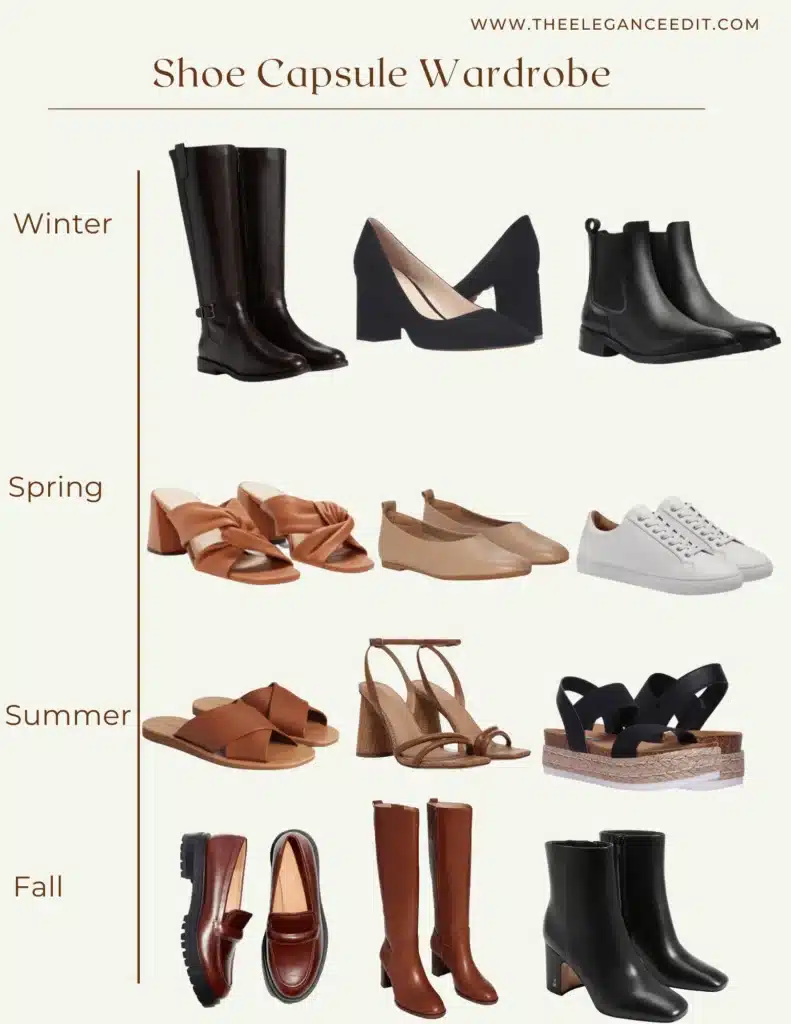
How Many Shoes Do You Actually Need?
Most women thrive with:
- 2–3 everyday pairs
- 2 polished daily pairs
- 1–2 seasonal or weather-specific pairs
- 1 dressy pair
That’s often enough to cover 90% of life.
More shoes don’t equal more options—better shoes do.
Signs a Shoe Doesn’t Match Your Lifestyle
Pay attention to these red flags:
- You love how it looks but never wear it
- You save it for “special occasions” that never happen
- It only works with one outfit
- You feel relief taking it off
- You avoid walking when wearing it
These shoes are teaching you what not to buy again.
Editing Your Closet With Lifestyle in Mind
Instead of decluttering emotionally, declutter practically.
Ask of each pair:
- Does this support my current routine?
- Would I buy this again today?
- Does it solve a real need?
Let go of shoes that belong to past versions of your life.
Why Repetition Is the Goal
Wearing the same shoes often is not boring—it’s intentional.
Repetition means:
- The shoes fit your life
- They match your wardrobe
- You trust them
Style confidence comes from familiarity, not novelty.
Buying Less, Choosing Better
Lifestyle-based shopping naturally leads to:
- Fewer impulse buys
- Higher satisfaction
- Less clutter
- More outfit consistency
It’s not about restriction—it’s about clarity.


A Better Question to Ask
Instead of asking:
“Is this fashionable?”
Ask:
“Will this make my daily life easier?”
That single shift changes everything.
Final Thoughts
Shoes that match your lifestyle don’t shout for attention.
They quietly support your day, your movement, and your confidence.
When you stop chasing trends and start choosing alignment, your wardrobe becomes simpler, stronger, and far more satisfying.
The best shoes aren’t the ones everyone is wearing—they’re the ones you keep reaching for.